Apothecary Organization · 6 min read
How to Organize a Home Herbal Apothecary: Dried Herb Shelf Life, Botanical Jar Labels & Waterproof Printing
By NibPaper Studio · Print-tested · 2026-11-25
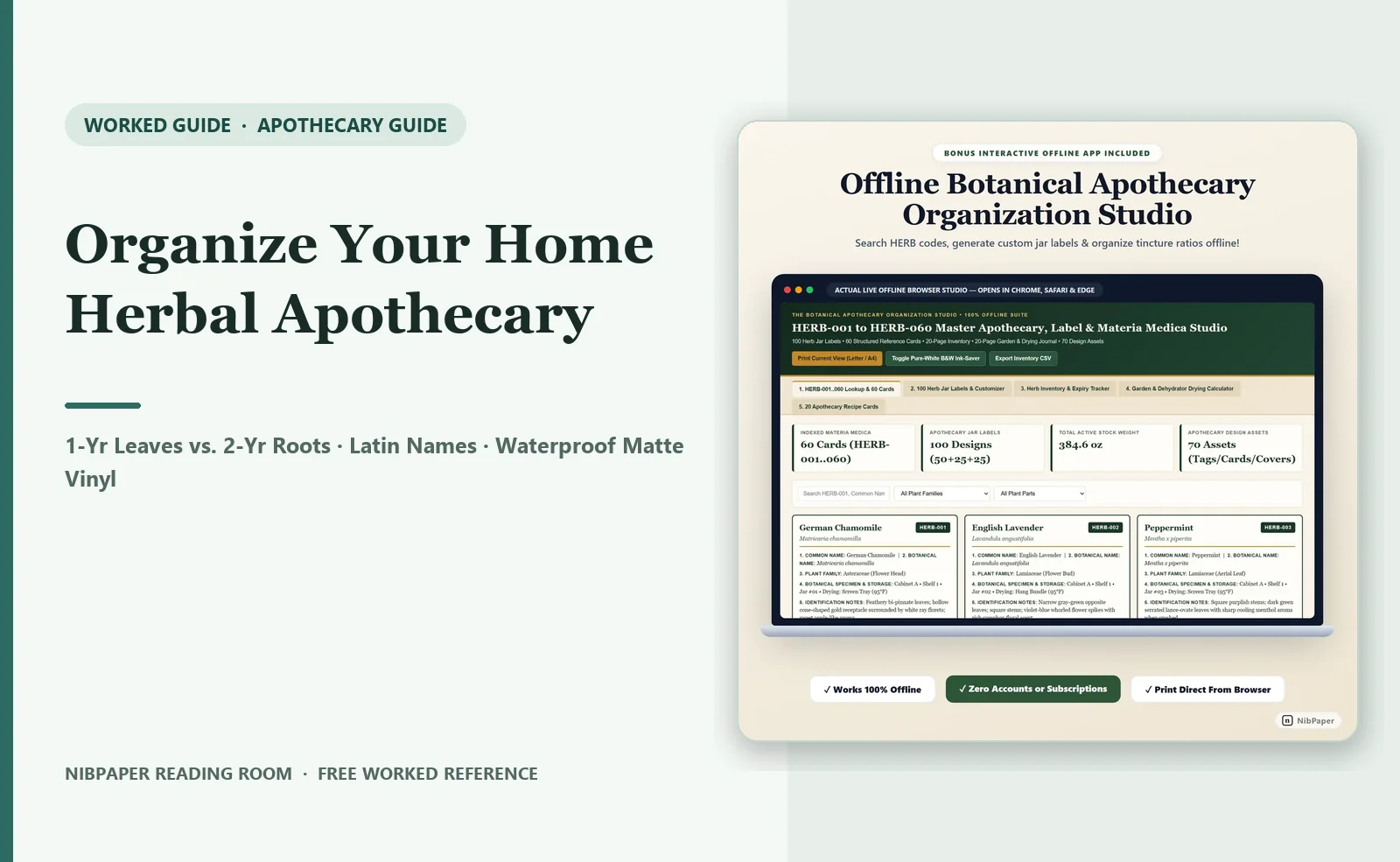
Why dried herbs lose aroma and color fast on open kitchen counters, plus exact shelf-life windows by plant part (1-year leaves vs. 2-year roots vs. 3–6 month powders), the 6 essential botanical label fields, and waterproof matte vinyl printing tips.
1. Protect Dried Herbs From Light, Heat, Moisture & Oxygen First
Before printing labels or alphabetizing shelves, your storage container and location determine whether dried botanicals stay aromatic for a full year or go flat in six weeks. Volatile aromatic oils break down quickly when exposed to direct sunlight, cooking steam, and humid air.
Airtight glass mason jars or bail-wire glass jars keep out pantry pests and moisture while letting you inspect botanicals for clumping or mold. Store clear jars inside a closed dark cupboard, or switch to amber glass jars if your apothecary sits on an open shelf, and keep every jar well away from stoves, ovens, dishwashers, and sunny windowsills.
2. Track Dried Herb Shelf Life by Plant Part (Not One Blanket Date)
Dried herbs rarely turn toxic simply from age, yet they steadily lose volatile oils, vibrant color, and culinary aroma. Because dense plant tissues hold aromatic compounds much longer than thin petals, group and rotate your apothecary by plant part rather than guessing.
Buy or dry whole leaves, flowers, and roots whenever possible, and grind powders only right before blending. Anytime an herb fades to a flat gray-brown or gives off almost no scent when crushed between your fingers, compost it and refresh the jar; discard immediately if you ever spot condensation or mold:
- Delicate Leaves & Flowers (Chamomile, Peppermint, Lemon Balm, Calendula): Peak aroma and quality for roughly 1 year (12 months).
- Whole Roots, Barks & Seeds (Burdock Root, Marshmallow Root, Cinnamon Bark, Fennel Seed): Dense structure holds quality for roughly 2 years (18 to 24 months).
- Finely Powdered Herbs: High oxygen exposure drains volatile oils rapidly, typically within 3 to 6 months.
- Quick Sniff-and-Color Check: Crush a small pinch between two fingers; bright natural color and crisp aroma confirm the jar is still fresh.
3. Include 6 Core Data Fields on Every Botanical Jar Label
Decorative labels showing only a single common word like 'Chamomile' or 'Mint' look charming on day one, yet create real confusion six months later when you cannot tell German Chamomile (Matricaria chamomilla) from Roman Chamomile or remember which summer harvest sits inside.
Design every 2×4-inch jar label around six clear fields: Common Name, Botanical Latin Binomial Name, Plant Part Used (flower head, aerial leaf, root), Harvest or Purchase Date, Source (homegrown, wildcrafted, or supplier), and an Expected Shelf-Life Review Date or cross-reference code (such as HERB-001). Adding a matching mini label on the jar lid also lets you scan deep shelves from above.
4. Print Oil- and Moisture-Resistant Labels on Matte Vinyl (Plus Smart Shelf Order)
Home apothecary shelves constantly encounter tea steam, herbal oil drips, and tincture splashes that make ordinary office paper curl and bleed. Print 10-Up 2×4-inch label sheets at Actual Size (100% scale) on weatherproof matte vinyl or waterproof polyester sticker paper formulated for your inkjet or laser printer; matte vinyl preserves a refined vintage look without glossy plastic glare.
If you print on standard paper or kraft sheets on a budget, seal the finished sheet with clear matte acrylic spray or smooth strips of wide clear packing tape before trimming. Arrange finished jars either by Plant Part (pairing matching shelf-life windows together), Alphabetically by common or Latin name for fast lookup in 40+ jar collections, or by Daily Frequency with tea staples at eye level.
Worked Example · Quick Reference
Home Herbal Apothecary Shelf-Life, Container & Labeling Reference Matrix
| Botanical Category | Typical Peak Shelf Life | Best Storage Setup | Rotation & Label Priority |
|---|---|---|---|
| Whole Leaves & Flowers (Chamomile, Mint, Calendula) | ~12 months (1 year) | Airtight amber glass or dark cupboard | Mark exact harvest month; refresh annually |
| Whole Roots, Barks & Seeds (Burdock, Fennel, Bark) | ~18 to 24 months (2 years) | Airtight glass away from heat/steam | Keep whole; note harvest season + source |
| Dried Berries (Elderberry, Hawthorn, Rosehips) | ~18 to 24 months (if bone-dry) | Airtight glass after crisp snap-test | Inspect quarterly for any clumping/moisture |
| Ground / Powdered Herbs & Roots | ~3 to 6 months | Small tightly sealed amber jars | Grind in small batches right before use |
Personal culinary, tea-blending, and household apothecary organization reference by NibPaper Studio, not medical, clinical, or FDA guidance. Always verify botanical identity via Latin binomial and discard any dried plant material showing moisture, off-odors, or mold.
Save or share this guide
Pin it to your board for later or pass it along to someone who needs it.
Common Questions
Frequently Asked Questions
How long do dried herbs stay potent in a home herbal apothecary?
When stored whole in airtight glass jars away from light, heat, and humidity, delicate leaves and flowers hold peak aroma for about 1 year, denser roots, barks, and seeds last about 2 years, and finely ground powders lose volatile oils fastest within 3 to 6 months.
What information should every herbal apothecary jar label include?
Every functional jar label should list six details: Common Name, Botanical Latin Binomial Name (to avoid plant look-alike confusion), Plant Part used, Date Harvested or Purchased, Source or supplier, and an Expected Review Date or index code matching your binder.
What is the best waterproof label paper for herb jars and tincture bottles?
Weatherproof matte vinyl or waterproof polyester sticker paper (matched to inkjet or laser printers) resists kitchen humidity, herbal oil drips, and alcohol tincture splashes while keeping a refined matte apothecary finish without peeling or smudging.