Family Caregiving · 5 min read
How to Build an ER-Ready Caregiver Medical Binder for an Aging Parent
By NibPaper Studio · Print-tested · 2026-11-22
The 4 documents paramedics look for first during a 2 AM emergency, plus how siblings prevent medication double-dosing and unfair expense tension without monthly apps.
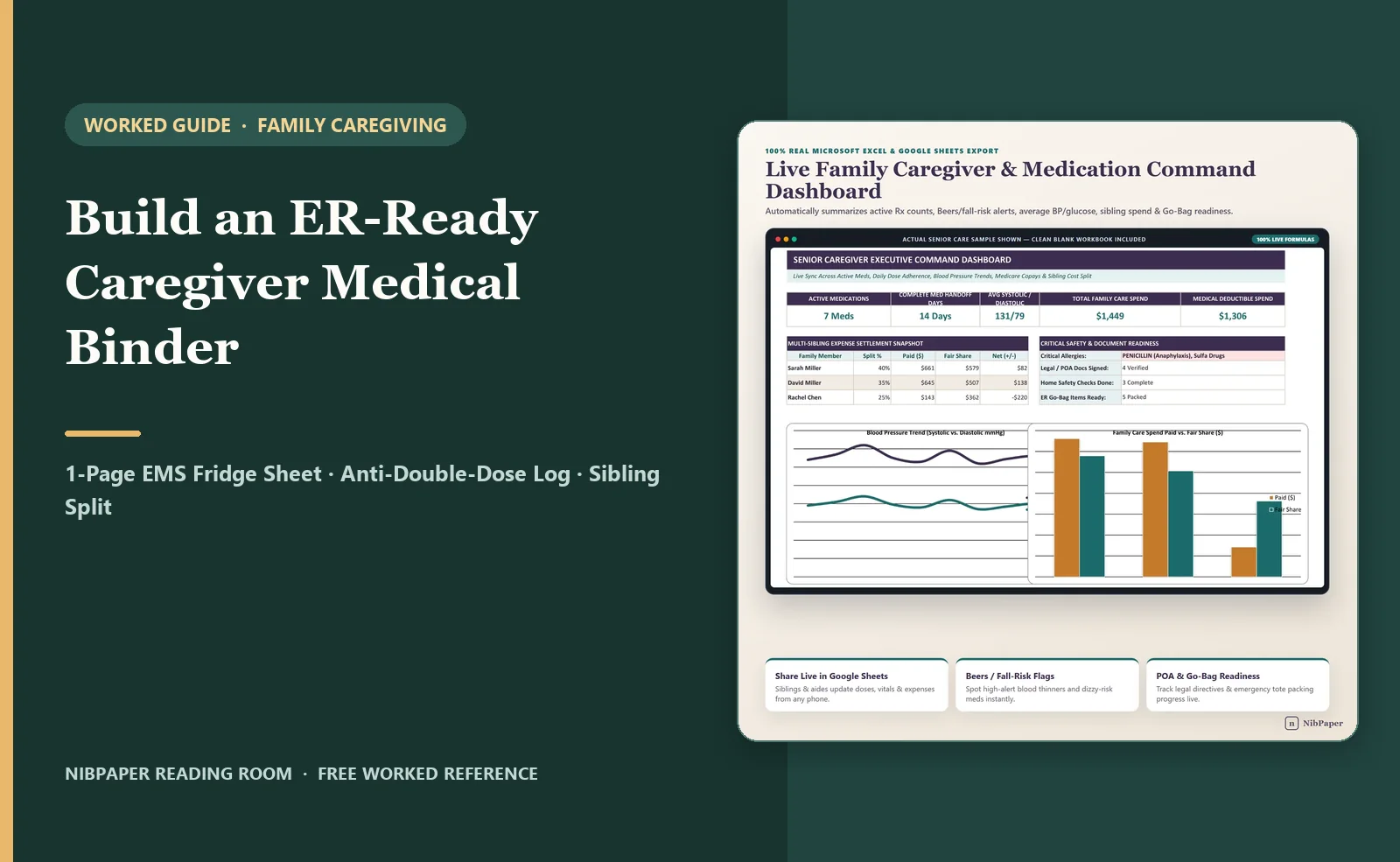
1. Post a 1-Page EMS Fridge Sheet Before You Organize Anything Else
When an ambulance arrives, paramedics do not have time to flip through a 40-page binder. They look straight at the kitchen refrigerator door for one clean page showing five facts in bold: critical drug allergies, code status or POLST location, Healthcare Power of Attorney phone number, blood thinners or fall-risk medications, and the current active prescription list with doses.
- Put critical drug allergies and blood thinners (such as Eliquis, warfarin, or clopidogrel) at the top in high contrast.
- Include the exact phone number for the named Healthcare Power of Attorney (POA) plus one local backup contact.
- Keep a matching cut-out wallet medication card inside your parent's purse or wallet and inside the ER Go-Bag.
2. Stop Accidental Double-Dosing Across Siblings and Aides
Most caregiving medication errors happen during shift handoffs. One sibling gives morning blood-pressure pills at 8:00 AM and another assumes they were skipped.
Switching to an AM, Noon, PM, and Bedtime handoff chart with required caregiver initials, PRN timestamps, and refused-dose notes removes guesswork whether you use a printed kitchen clipboard or a live shared Google Sheet.
3. Protect the Critical 7-Day Hospital Discharge Window
Hospital stays almost always change dosages, add short-term prescriptions, or stop older medications. Before leaving the discharge desk, reconcile every single medication line by line (New, Stopped, or Changed Dose), schedule the primary care follow-up within 7 days, and write down the exact red-flag symptoms that mean calling the clinic versus dialing 911.
4. Track Shared Family Care Costs Transparently From Day One
Quiet resentment grows fast when one adult child pays for weekly groceries, grab bars, home aides, and Medicare Part D copays out of pocket.
Agreeing on fair target split percentages up front and logging receipts in one shared sibling ledger that marks HSA or tax-deductible medical spend keeps family conversations calm and transparent.
Worked Example · Quick Reference
4-Part Emergency & Handoff Readiness Checklist (Illustrative Family Setup)
| Care Checkpoint | Where to Keep It | What Must Stay Current | Update Cadence |
|---|---|---|---|
| 1-Page EMS Fridge Sheet | Red plastic sleeve on kitchen fridge + ER Go-Bag | Drug allergies, code status/POLST, Healthcare POA phone, blood thinners, active Rx list | After every doctor visit or hospital stay |
| Daily Med Handoff Chart | Kitchen clipboard or shared Google Sheets tab | AM/Noon/PM/Bedtime caregiver initials, PRN timestamps, missed or refused dose notes | Logged live after every dose |
| 7-Day Discharge Reconciliation | Front pocket of Caregiver Medical Binder | New vs. stopped vs. changed prescriptions, removed old bottles, 7-day PCP follow-up date | Before leaving the hospital floor |
| Sibling Expense Split Ledger | Shared family Google Sheet (export CSV backup) | Copays, home aides, grab bars, groceries, target split %, medical deductible flags | Weekly or monthly settlement |
Organizational reference example only, not medical, pharmacy, or legal advice. Always confirm medication schedules, high-alert or AGS Beers fall-risk warnings, and discharge instructions with your parent's prescribing clinician or pharmacist, and consult an elder-law attorney for Healthcare POA or Advance Directives.
Save or share this guide
Pin it to your board for later or pass it along to someone who needs it.
Common Questions
Frequently Asked Questions
What belongs on a 1-page EMS fridge sheet for an aging parent?
Keep it to one high-contrast page: full legal name, date of birth, allergies, critical conditions (such as blood thinners or pacemaker), current medications with exact doses, primary doctor, emergency contacts, and where the signed Healthcare POA or POLST form is stored.
How do multiple caregivers or siblings prevent accidental double-dosing of medications?
Use a shared daily AM/Noon/PM/Bedtime medication handoff log where the person who administers each dose initials the exact time box immediately. Never rely on verbal handoffs or memory across shift changes.
Why is hospital discharge medication reconciliation so important?
After a hospital stay, discharge orders often stop old prescriptions, adjust dosages, or add temporary antibiotics. Comparing the old home medication list side by side against the new discharge sheet catches duplicate or discontinued pills before returning home.
Official Primary References
- Getting Started With Family Caregiving & Medical Organization(National Institute on Aging (NIH))
- Medicare Caregiver Support & Coordination Resources(Medicare.gov)