Migraine & Symptom Tracking · 6 min read
How to Build a 90-Day Neurologist Migraine Summary (Silent Aura, 4 Phases & Acute Med-Day Benchmarks)
By NibPaper Studio · Print-tested · 2026-11-24
Most neurology follow-ups last 15 minutes. Capture all 4 migraine phases, silent or vestibular auras (0/10 pain), 20 trigger suspects, 2-hour medication relief speed, and monthly acute med-day counts onto one calm, readable 90-day summary sheet.
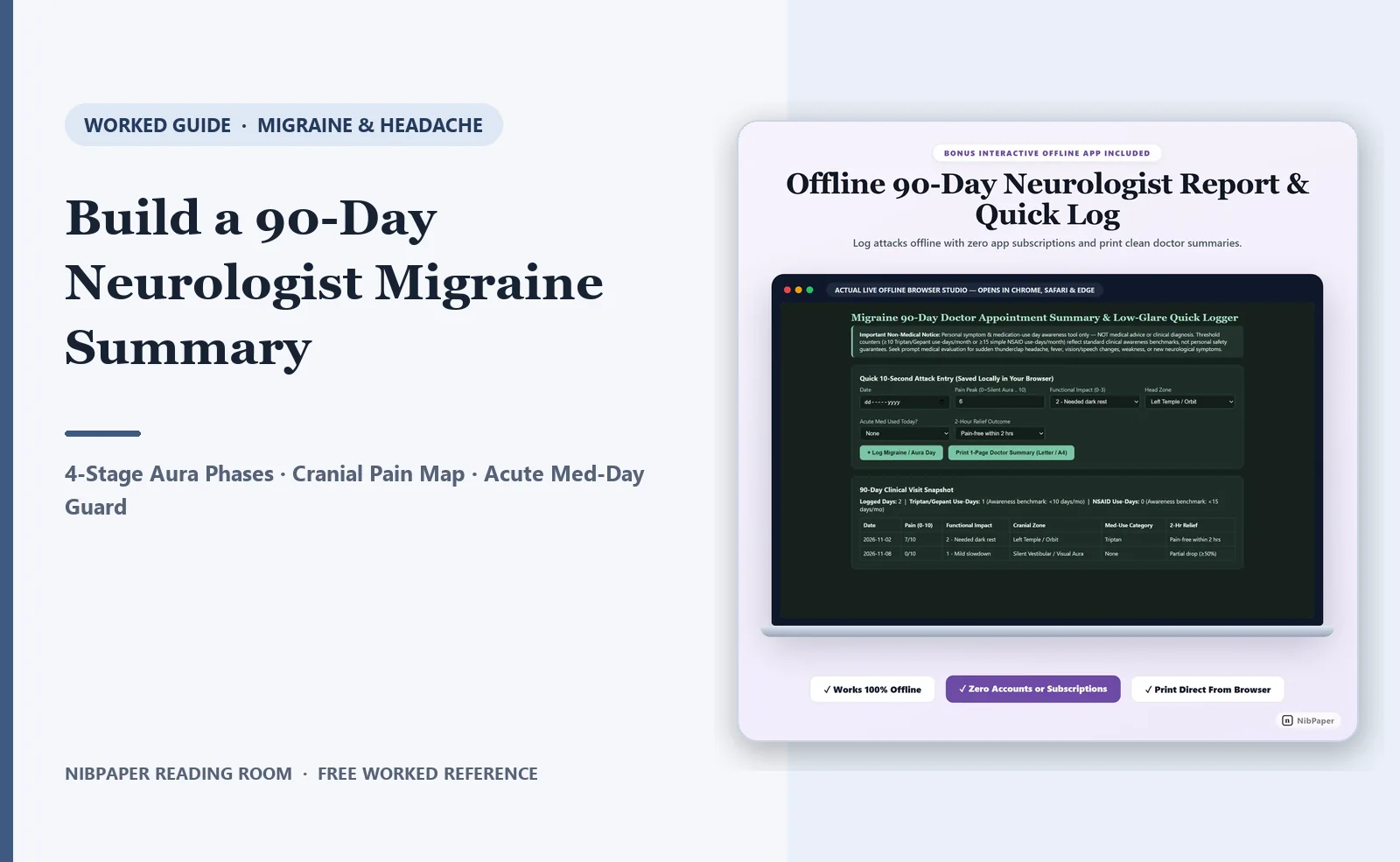
1. Log Functional Impact & Silent Auras, Not Just a Raw 1–10 Pain Number
Many people with vestibular or silent migraine skip logging an episode because their head pain stayed at 0/10, even though visual zig-zags, vertigo, word-finding difficulty, or light sensitivity disrupted half their workday.
Neurologists evaluate BOTH headache days and functional disability, so pair your 0–10 score with clear daily-function tiers (0 = Silent Aura, 1–3 = Can Work, 4–6 = 50% Slowdown, 7–8 = Dark Room Needed, 9–10 = Bedrest) and a 4-view Cranial & Cervical Pain Map showing where pain starts and radiates.
2. Separate All 4 Migraine Phases to Catch Early Prodrome Windows
According to the National Institute of Neurological Disorders and Stroke (NINDS), a migraine attack often unfolds across four distinct phases rather than a single sudden headache.
Separating these stages in your diary helps you notice early warning clues, and helps your doctor see whether early rescue intervention works better than waiting until peak pain:
- Stage 1: Prodrome (2–48 hrs before pain): Yawning, neck stiffness, food cravings, mood shifts, brain fog, or early light sensitivity.
- Stage 2: Aura (5–60 min): Shimmering zig-zags, blind spots, tingling, speech difficulty, or vestibular dizziness/vertigo.
- Stage 3: Attack (4–72 hrs): Throbbing or unilateral temple/orbit/occipital pain, photophobia, phonophobia, nausea, or scalp tenderness.
- Stage 4: Postdrome (24–48 hrs recovery): Exhaustion ('migraine hangover'), slow concentration, neck tightness, and gradual reset.
3. Track Trigger Stacking (24 Hours Prior) Instead of Blaming One Food
Migraine triggers frequently stack rather than act alone, for instance, a 24-hour barometric pressure drop may be harmless on a well-rested day, yet trigger a full attack when combined with 5 hours of sleep, skipped lunch, or hormonal cycle shift.
Recording 20 repeatable suspects (barometric hPa/inHg drop, sleep hours, hydration glasses, caffeine shift, skipped meals, screen glare, cycle day) in a simple 31-day matrix reveals real patterns across 30–90 days without relying on hazy memory.
4. Count Monthly Acute Medication Days & 2-Hour Relief Speed for Every Appointment
Two numbers almost every headache specialist asks for in the first five minutes of a visit are (a) how many total headache and severe days occurred in the past 90 days, and (b) how many days per month you took acute rescue medications, alongside whether they gave pain freedom or >=50% relief within 2 hours.
Tracking monthly triptan/gepant days and simple NSAID days helps you bring clean, factual data to your doctor when discussing preventative options or medication-overuse (rebound) awareness benchmarks.
Worked Example · Quick Reference
What a Clear 1-Page 90-Day Neurologist Visit Summary Captures (Reference Matrix)
| Clinical Visit Question | What to Log Daily (10 Sec) | 90-Day Summary Rollup | Awareness Benchmark to Discuss w/ MD |
|---|---|---|---|
| Monthly Attack Frequency | Date, 0–10 scale + Silent Aura flag | Total migraine days vs. pain-free days | Helps classify episodic vs. chronic frequency |
| Functional Impact & Location | 4-view Cranial Map + 0–3 impact tier | Left/Right/Bilateral & dark-room days | Documents workplace/daily-life disability |
| 2-Hour Rescue Efficacy | Med taken, time, pain @ 0h vs. @ 2h | % of attacks relieved within 2 hours | Shows whether current rescue plan works |
| Triptan / Combination Days | 1-tap count on acute med days | Monthly acute med days (Mo 1 / 2 / 3) | Standard awareness reference: <10 days/mo |
| Simple NSAID / OTC Days | 1-tap count on simple analgesic days | Monthly simple analgesic days (Mo 1–3) | Standard awareness reference: <15 days/mo |
| Top Repeating Triggers | 24h prior sleep, weather, cycle, food | Top 3–5 correlated triggers (% of attacks) | Guides realistic lifestyle & preventative timing |
Personal health-tracking organization guide only, NOT medical advice, clinical diagnosis, or personal safety limits. Awareness benchmarks reflect general clinical reference thresholds to discuss with your doctor. Seek prompt medical evaluation for sudden thunderclap headache, fever, stiff neck, vision/speech changes, weakness, or new neurological symptoms.
Save or share this guide
Pin it to your board for later or pass it along to someone who needs it.
Common Questions
Frequently Asked Questions
Should you log silent or vestibular migraines that have 0 out of 10 head pain?
Yes. Visual zig-zags, vertigo, brain fog, and light sensitivity still count as migraine activity and affect treatment choices. Pairing a 0-to-10 pain score with functional impact tiers and an aura checklist gives your neurologist an accurate picture of every episode.
What are standard monthly acute medication-day awareness benchmarks?
Headache specialists commonly monitor whether acute rescue medications are used on 10 or more days per month for triptans, gepants, or combination analgesics, or 15 or more days per month for simple NSAIDs or acetaminophen. Track your monthly counts and review personal limits directly with your doctor.
Why do neurologists ask for 90 days of migraine data instead of 1 week?
A single week can be skewed by one storm front or illness, whereas 90 days spans three full hormonal and weather cycles. It clearly shows average monthly attack days, 2-hour rescue relief rates, and whether a preventative plan is reducing frequency.
Official Primary References
- Migraine: Symptoms, Phases, Triggers & Treatment Information(National Institute of Neurological Disorders and Stroke (NINDS / NIH))