WOMEN'S HEALTH PREP · 4 min read
How to Prepare a 1-Page Perimenopause Summary for a 10-Minute OB-GYN Appointment
By NibPaper Studio · Print-tested · 2026-11-21
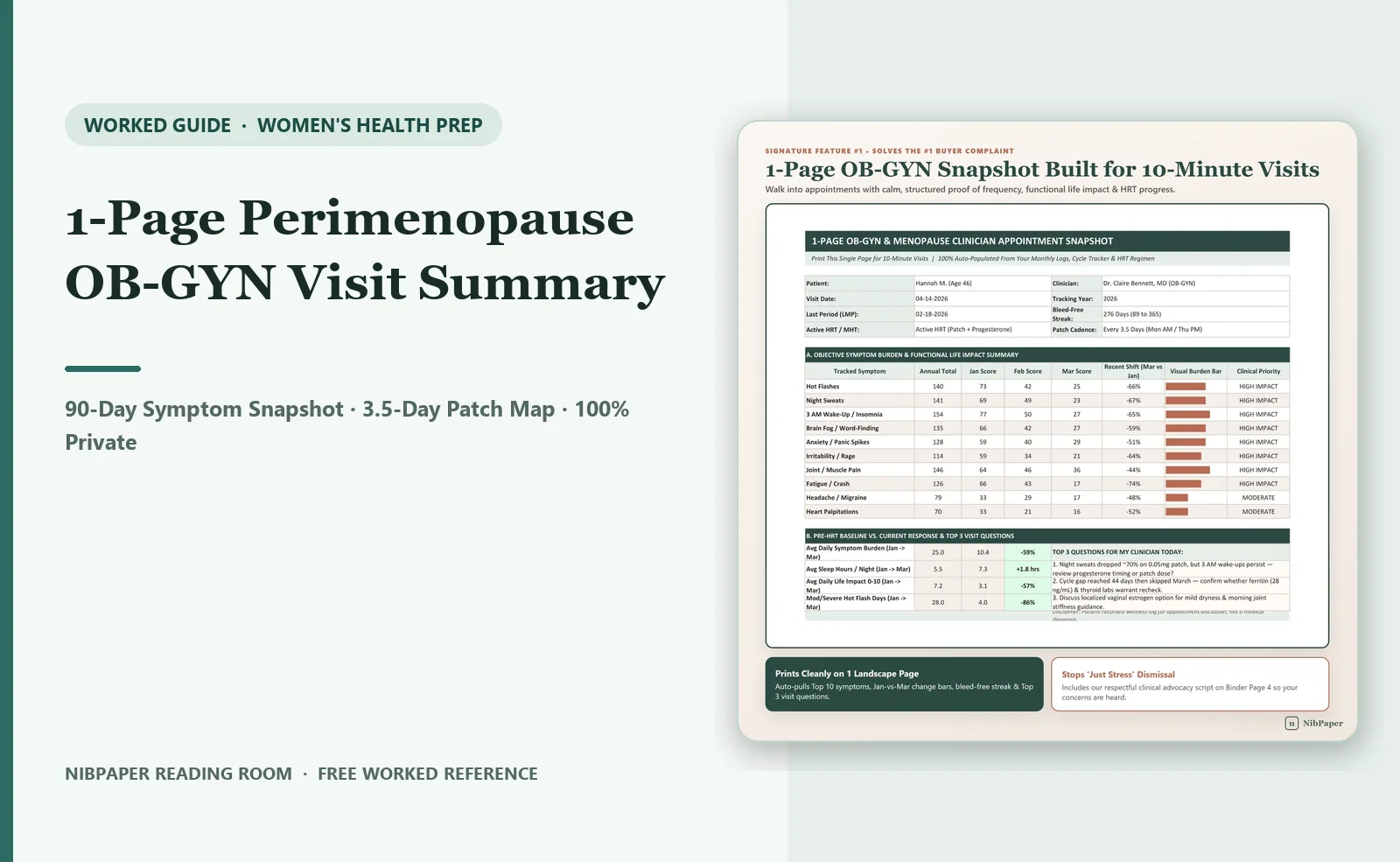
Bringing 30 messy journal pages into a rushed visit rarely gets read. Condensing 90 days of symptoms, irregular cycle gaps, and 3.5-day patch logs onto one calm page changes the conversation.
Why scattered symptom notes get missed in short medical appointments
Most routine OB-GYN and primary-care appointments allow roughly 10 to 15 minutes of face-to-face discussion. When symptoms span multiple body systems, like 3 AM wake-ups, sudden anxiety spikes, heart palpitations, joint stiffness, brain fog, and unpredictable cycle intervals, trying to summarize three months from memory makes it easy to forget key timelines or functional impact.
Four practical details that fit cleanly onto one scannable page
Before your next appointment, organize your personal tracking records into four brief blocks your clinician can scan in under 60 seconds:
- Top 8–10 Symptoms With Frequency & Functional Impact: Note how many days per month each symptom occurs and how it affects work focus, sleep hours, or daily energy (0–10 scale) rather than just checking a vague box.
- Irregular Cycle & Bleed-Free Timeline: Record your last menstrual period (LMP), shortest vs. longest recent cycle gaps, heavy flooding days, and any bleed-free streak toward the 365-day milestone.
- Current HRT / Patch Cadence & Baseline Shift: If using a twice-weekly 3.5-day estradiol patch (such as Mon AM / Thu PM) or progesterone schedule, list current doses, skin-site rotation notes, and whether symptoms shifted after 4 to 12 weeks.
- Top 3 Focused Questions Only: Write down your three highest-priority questions (for example, checking ferritin or thyroid labs alongside sleep disruption) so the most important topics get addressed first.
Keep your sensitive wellness logs 100% private on your own device
Our Perimenopause & HRT Symptom Tracker Suite auto-builds this exact 1-Page OB-GYN Appointment Snapshot from 20 linked Excel & Google Sheets tabs, includes a 32-page hyperlinked US Letter/A4 printable binder with a 4-zone patch body map, and adds a 100% local Offline Browser Studio, zero cloud servers, zero monthly health-app subscriptions.
Worked Example · Quick Reference
1-Page Perimenopause Appointment Prep Checklist (Personal Organization Reference)
| Section on Your 1-Page Sheet | What to Summarize (Last 30–90 Days) | Why It Helps in a 10-Min Visit |
|---|---|---|
| Cycle & Bleed-Free Snapshot | LMP date, cycle range (e.g. 22–44 days), flooding days, bleed-free count | Replaces guessing when periods become erratic or skip months |
| Top Disruptive Symptoms | Frequency per 30 days, peak severity (1–3), average sleep hours/night | Highlights multi-system patterns like 3 AM wake-ups & brain fog fast |
| HRT / Patch & Supplement Log | Current regimen, 3.5-day patch swap rhythm, Pre-vs-Post symptom shift | Shows clear 4-week and 12-week response trends cleanly |
| Top 3 Visit Priorities & Labs | 3 concise questions + prior Ferritin, TSH/FT4, Vit D, Lipids or DEXA dates | Keeps a short appointment focused on what matters most to you |
For personal appointment organization and educational tracking only, not medical advice, diagnosis, or prescription guidance. Always consult a licensed OB-GYN or healthcare provider for clinical care.
Save or share this guide
Pin it to your board for later or pass it along to someone who needs it.
Common Questions
Frequently Asked Questions
How many weeks of perimenopause symptoms should I track before an OB-GYN visit?
Tracking 60 to 90 days gives your clinician enough cycle and symptom data to spot trends across at least two menstrual cycles. Even 30 days of consistent daily scores is far more actionable than trying to recall patterns during a 10-minute appointment.
Why is a 1-page summary better than bringing an entire notebook or phone app?
Most gynecology visits allow only 10 to 15 minutes of face-to-face time. A single printed sheet showing your top 3 symptom scores, cycle lengths, and current medications lets your doctor absorb your history in under 60 seconds and spend the visit discussing options.
How do you track a 3.5-day estradiol patch rotation without mixing up days?
Pair two fixed weekday slots every week, such as Sunday morning and Wednesday evening, and log both the exact application time and body site (left lower abdomen, right upper hip) so you avoid skin irritation and missed swaps.
Official Primary References
- What Is Menopause? Symptoms & Health Overview(National Institute on Aging (NIH))
- The Menopause Years: Patient FAQ(American College of Obstetricians and Gynecologists (ACOG))